
Awards
Trivago – Clyde Hall as one of the top ten best 5-star accommodations in Ontario – 2018 (only one awarded outside Toronto)
Narcity – Clyde Hall as one of the 11 best accommodation in Ontario – 2019
Cottage Life Magazine – Clyde Hall top 10 best B&B in Ontario – 2015
Huffington Post – Top 15 best B&B’s in Ontario – 2016
Tiao Safe Travel award – 2021
HGTV top 15 cozy Canadian B&B’s – 2017
Best 5 romantic getaways – National Post 2022
Top 10 best B&B in Canada – B&B guide.com
Best under-the-radar leaf-peeping destinations in eastern Ontario – Globe and Mail 2020



Kayak.com
The Caldwell Mansion {Clyde Hall}

Clyde Hall c. 1860
This stone building, commonly called the Caldwell mansion is nothing short of an architectural treasure to the community and a tribute to its history and the history of the region of Lanark Highlands
Caldwell Mansion {Clyde Hall} was built by the Caldwell Family (Alexander “Sandy” Caldwell and his wife Mary Ann Maxwell} in 1846. The family included his sons Boyd, William and John.
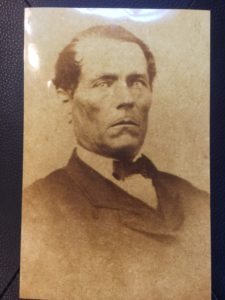
Alexander Caldwell c.1869
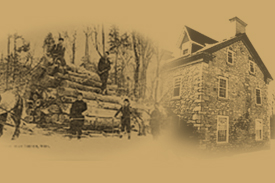
The Back of Clyde Hall c.1875
William added “Clyde” to his name to distinguish himself from other William Caldwells. This is perhaps where the name Clyde Hall comes from. Unlike his father, who had been trained solely on the river and in the bush, he also received a university education, graduating from Queen’s College, Kingston, in 1866 with a BA.
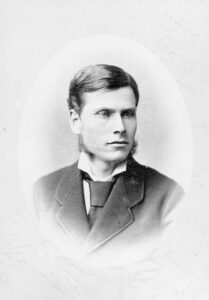
Caldwell moved to Kingston in 1883 and reduced his business commitments to the operation of the Clyde Roller Mills (flour and oatmeal) and the Aberdeen Woollen Mills in Lanark village. He nevertheless developed an interest in prospecting and speculated in iron-ore properties in the Lanark-Renfrew area, on Gunflint Bay in the international border region of northwestern Ontario, and north of Temagami. He contributed several mineral samples to Ontario’s exhibit at the Columbian exposition in Chicago in 1893.
W.C Caldwell could never give his undivided attention to business because of a lifelong involvement in politics. He spent 23 of the next 33 years as the liberal member for the riding of Lanark under Premier Oliver Mowat 1872-1905).
W. C. Caldwell died in Lanark in 1905. A Train was named after him.
CALDWELL, WILLIAM CLYDE
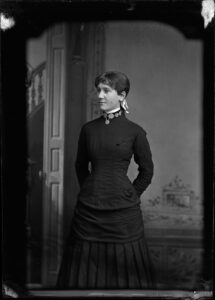
Mrs W. Caldwell 1871
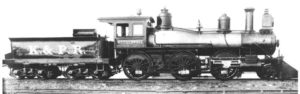
Kingston & Pembrooke Railway. Engine named W.C Caldwell. 1884 – 1912 when CPR took over the line. The line closed 1986
Rivers and Streams Bill (McLaren vs. Caldwell)
The case arose from a controversy that came to be known as the “Lumbermen’s Feud”. Peter McLaren owned a lumber milled and timber slides on the Mississippi river and its northern tributaries that flowed through land that he owned in Lanark in order to provide for transporting his own logs. Boyd and William Caldwell owned rival mills, and were attempting to drive 18,000 logs through those slides. McLaren sued the Caldwell’s to restrain them from passing or floating timber and saw logs through his slides.
The Caldwell’s claimed that McLaren was unable to prevent the use of the river for the passage of his logs because of the statutes in force in Ontario. McLaren asserted that he had the right to do so under common law
In support of Caldwell, Ontario Premier Oliver Mowat arranged the passage of the Rivers and Streams Act, 1881 which required the unobstructed passage of logs, timber, rafts, etc. down all waterways in the province, whether improved or not, subject to the payment of any reasonable tolls. This Act was disallowed by the federal government under Sir John A McDonald on the grounds that it infringed upon private property rights. This conflict added fuel to the ongoing quarrel between the federal and provincial governments; the bill was re-enacted and disallowed again in 1882 and 1883. A total of 3 times. It is no wonder that Federal and Provincial governments have a history of disputes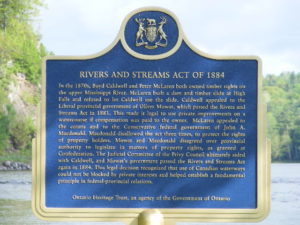
In an 1882 debate in the Legislative Assembly of Ontario, Mowat maintained that the Rivers and Streams Bill fell wholly within provincial jurisdiction. The Appeal went all the way to the British Privy Council
The Privy Council held in favour of Caldwell, ruling that the decision of the Ontario Court of Appeal stating that the Upper Canada Act was correct.
McLaren vs Caldwell established the principle in Canadian law that waterways are open to all, and that while private interests can charge a reasonable amount for the use of any improvements they have made, they cannot refuse passage to anyone. The victory was essentially a political one – Mowat’s refusal to back down in the face of MacDonald’s intransigence made it more difficult for the federal government to disallow legislation that clearly fell under provincial jurisdiction, (1867 confederation) and led MacDonald increasingly to send matters to the courts. Essentially, disallowance was considered to be inconsistent with the rule of law, as well as being incompatible with the political conception of Canadian federalism.
Clyde Hall over the years:
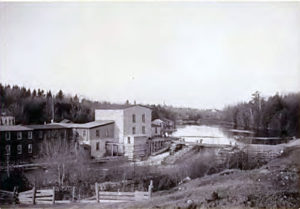
Caldwell truss mill – Clyde River right next door to Clyde Hall. The building is long gone.
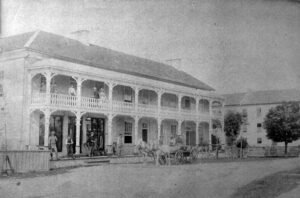
Boyd Caldwell Textile mill. Was renamed the Kitten mill and closed in the 1990’s. The building has been demolished 2023.
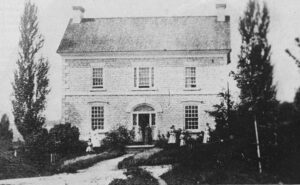
Clyde Hall c 1889 . Note the solarium was not constructed till c.1893-1900
After the Caldwells, Michael and Mary Louise Cullen were the owners of
Clyde Hall from 1932 to 1938.
M.J. Cullen was the Chief Immigration Inspector of the Dominion, for three terms, and private secretary to the Hon. Wesley Gordon, Minister of Immigration.
When the Cullen family bought Clyde Hall, Michael was 48, his wife, Minnie, was 45. Their children: John was 21, Muriel was 19, Kathleen was 17, Dorothy was 16, Helen was 12, and Mary was 3. It was their summer home and they even retained one of the Caldwells workers, Mr.Fred Roffey as a caretaker.
In the fall of 1938, M.J. Cullen sold the property to Herbert A. Plant, (1893-1972) an Ottawa businessman. Plant was the co-founder of Plant and Anderson Limited, and in later years he was a Director of the Ottawa Rough Riders. His brother, Frank H. Plant, served as Mayor of Ottawa from 1921-1923, and again in 1930.
Clyde Hall was a summer home for Herbert Alfred Plant (1893-1972) and his wife, Gladys Lilian Robertson Plant (1895-1986), and their two children, Isabel Plant, (1922-2006), and James Plant, (1925-2018)
Gladys Plant was a member of the Imperial Order of the Daughters of the Empire (I.O.D.E.), and frequently entertained members of her club at Clyde Hall, during the summer months, when they were in residence there.
We thank the family for providing these pictures of Clyde Hall at that time.
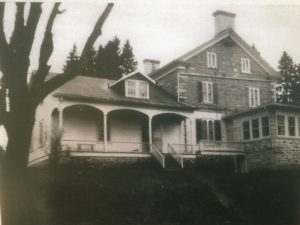
Summer Kitchen attached to the main house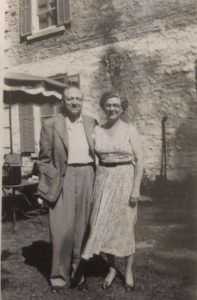
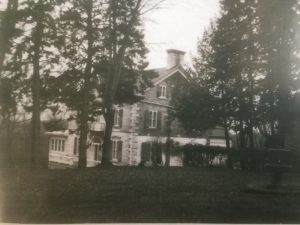
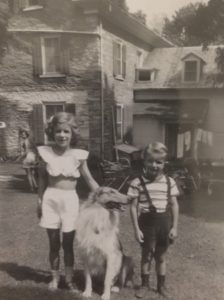
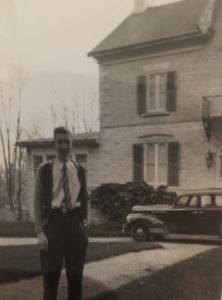
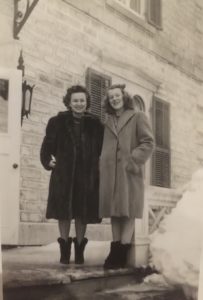
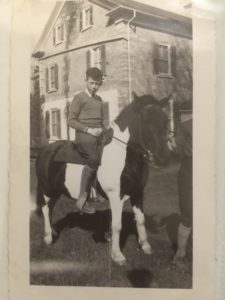
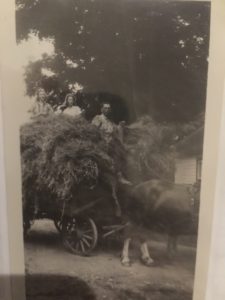
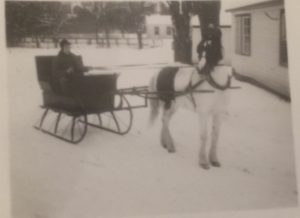
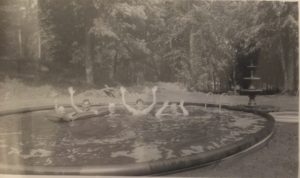
inground pool c 1936-1950
Around the mid 1940-50’s the home became owned by the McMullen family. Sherri Lillico was a little girl and remember happy times there. It eventually became a convalescence home and seniors residence. But over the years it went into disrepair. It was eventually abandoned in the early 1970’s. For close to 30 years the mansion stood empty, and endured vandalism, fire and Mother Nature and hippie squatters who produced and taught candle making. Finally in 1999 the big fire destroyed almost the entire structure. 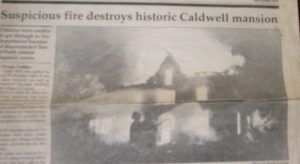 However, due to the outstanding original stone masonry, all the walls and basement were judged to be structurally sound. That firm foundation was the starting point for the restoration and painstaking work that was about to begin.
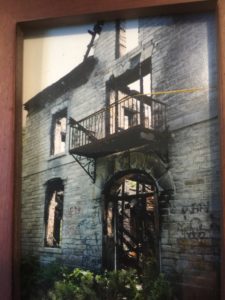 In 2001 Sherri and Brian Lillico were given the chance to purchase the property. Much of the original property is now Timber Run Golf Club. Sherri and Brian began a 2 year labor of Love to restore the building. The old banister and the original Bell & co. pump organ that had been previously removed by a concerned neighbour, was return and put back into the home. New additions were added. Stone masons were given the tasks of hand carving the entrance stonework which needed replacing. Much of the floorpan matched to the original design. Incredible details in workmanship and quality were kept. If fact 95% of the original design was kept, and materials matching the original build were used. Modern amenities were added like air conditioning, spa tubs, in-floor heating. Geo-Thermal heating and cooling were added later. You may still be able to see the burnt beam that was left as a reminder of the restoration. In 2003 they opened up Clyde Hall B&B.
In 2016-2017 Liisa and Robert Salzmann bought Clyde Hall and are still operating the B&B. Welcoming guests and making great food. Clyde Hall B&B has been recognized for many awards and many great reviews from our guests.
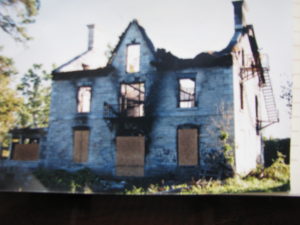
Clyde Hall as it appeared in 2000
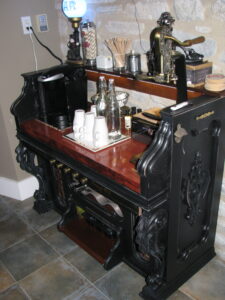
The original pump organ c 1877-1887. Now repurposed as a coffee bar at the B&B

New Gates added 2011
In 2011, local Blacksmith, Tony Walsh, created new gates for Clyde Hall.
The Lanark Fire
Lanark Village was first settled in 1820 (then called New Lanark) as a government supply depot for the Lanark Society Settlers who set out from the village to populate the surrounding townships. It consisted first of only the depot and a single store, but quickly grew to include other shops, a grist mill on the Clyde River, and many homes. As the lumber industry began to flourish and the region’s ‘timber barons’ began to run their logs down the Clyde through Lanark, the village grew rapidly.
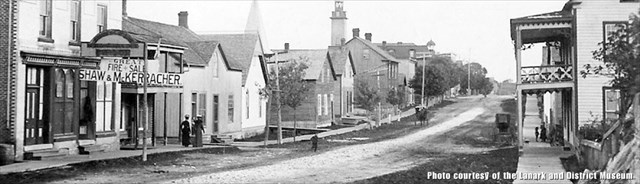
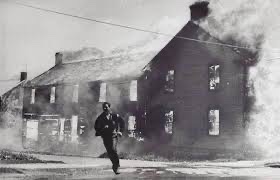
Around nine o’clock on June 15th, 1959, a single spark ignited a fire at the Campbell Sash and Door Factory (a planing mill) at the corner of George and Owen Streets. The fire went unnoticed for a few crucial minutes, allowing it to take hold in the dry fuel of the factory’s wood and sawdust. Within minutes the factory was ablaze and the fire had already begun to spread to nearby buildings (as seen in the photo to the left, showing a man running past the burning factory to warn firefighters that his home was now burning as well). The merciless wind and dry heat of the summer day then took hold of the fire, which quickly began to move down the village’s main street.
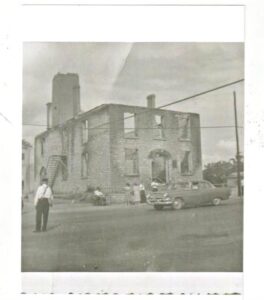
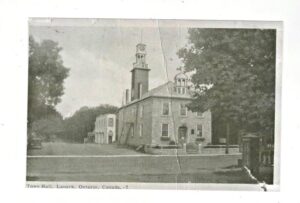
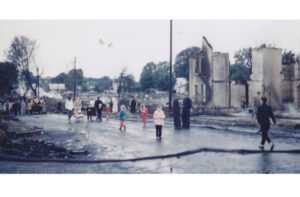
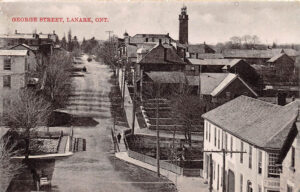
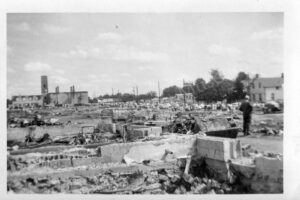
As the flames began to travel down George Street, sparks and burning debris were blown ahead onto the dry rooftops of the village. Witnesses say that some buildings beside the fire were simply superheated to the point that they themselves combusted. Half way along the first block the fire crossed the street and continued to burn along each side as firefighters from every town and village as far away as Ottawa tried in vain to stop its advance. Seeing the approach of the inevitable, many people began to empty their furniture and belongings into the streets, much of which eventually caught a spark and burned where it sat. The fire soon crossed Clarence Street, burning the village’s town hall and the stores that surrounded it.
Around noon, as the wind began to die down, the fire was finally halted as it neared Clyde Hall. Though sparks had blown across the river and traveled beyond the far edge of the village, thankfully no other fires got out of control. The fire finally burned itself out shortly after being stopped, but the village had been devastated.
In those three short hours over 40 homes and businesses were destroyed and nearly 100 people were left homeless. Once the busy center of the village, nothing now stood along George Street between the Sash and Door Factory and the Locker Plant (Pretty Goods today). For a number of days the streets of Lanark were lined with a steady stream of cars coming from miles around to view the devastation. Though so much had been lost, many villagers vowed to rebuild their homes and livelihoods, including the owner of the hardware store who promptly hitched a ride to Toronto to get a loan and buy new stock, which he was selling to those in desperate need in Lanark just two days after the fire from a makeshift store in his home. The resilience of Lanark’s people was tested and proven that day and in the coming years.
Many of Lanark’s homes were indeed rebuilt along with some of its businesses, but the village never again boasted the vast array of shops and services that it once had. The great fire of 1959 was a major blow to the village from which it is still trying to recover today.